
Fuller, one of the pioneers
Richard Buckminster Fuller, one of the great visionaries of the 20th century, dedicated his life to rethinking architecture and design with a focus based on efficiency, sustainability, and adaptability. He firmly believed that humanity needed to develop structural solutions that would maximize resources while minimizing environmental impact.
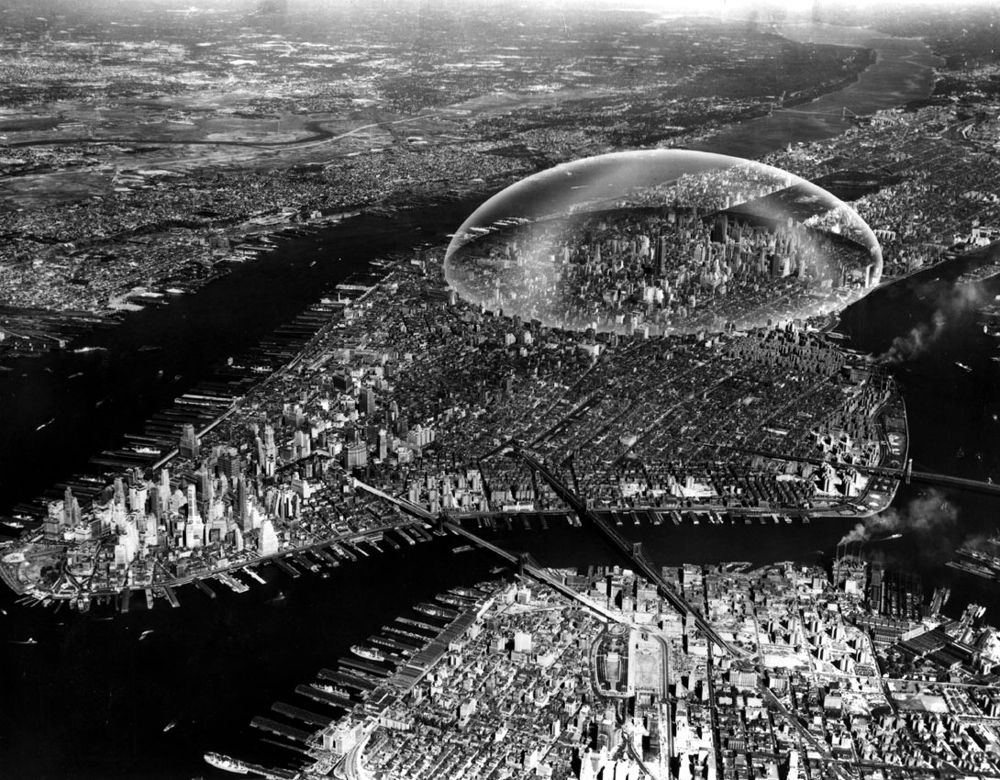
For Fuller, architecture was not merely a means of constructing spaces, but a tool for redefining the relationship between human beings and their environment. His legacy materialized in inventions such as the geodesic dome, an ultralight and resistant design that revolutionized how we conceive habitability. Guided by his philosophy of “doing more with less,” he championed the use of flexible, self-sufficient structures engineered to optimize resources without compromising functionality or comfort. His work anticipated many of today’s concerns surrounding climate change and unchecked urban growth, proposing alternatives that seemed utopic in his era, yet are more relevant now than ever.
In this context of innovation and the search for sustainable solutions, we are certain that there is much of Fuller in Skybubbles, emerging as a contemporary embodiment of his vision. Our accommodation project merges architecture and nature in a proposal that removes barriers and enables an immersive experience of the surrounding environment, without disrupting its balance. Skybubbles is not merely a reinterpretation of the concept of habitat, but a logical evolution of Fuller’s principles, applied to an era in which sustainability and sensory experience have become key factors in architecture and design.
Just like Fuller’s geodesic domes, Skybubbles are designed using a minimum amount of material while providing maximum structural strength. Their pneumatic design enables an efficient distribution of air pressure, ensuring stability without the need for foundations or alterations to the terrain. This not only facilitates installation and transportation, but also reduces their environmental impact to virtually zero. Fuller always advocated for lightweight, nomadic, and adaptable architecture, and Skybubbles bring this vision to life, allowing the structures to be relocated without leaving a trace on the landscape.
But beyond the structure itself, what truly connects Skybubbles with Fuller’s work is the experience of space. For him, architecture should not be a boundary between human beings and their surroundings, but rather a means of enhancing their connection with nature. At Skybubbles, we take this idea to the extreme, offering a stay in which boundaries disappear and the landscape becomes the true protagonist. Sleeping beneath the open sky, without visual barriers, architectural interference, and with complete integration into the surroundings, is the purest expression of Fuller’s vision of an architecture that does not impose itself, but instead flows with its context.
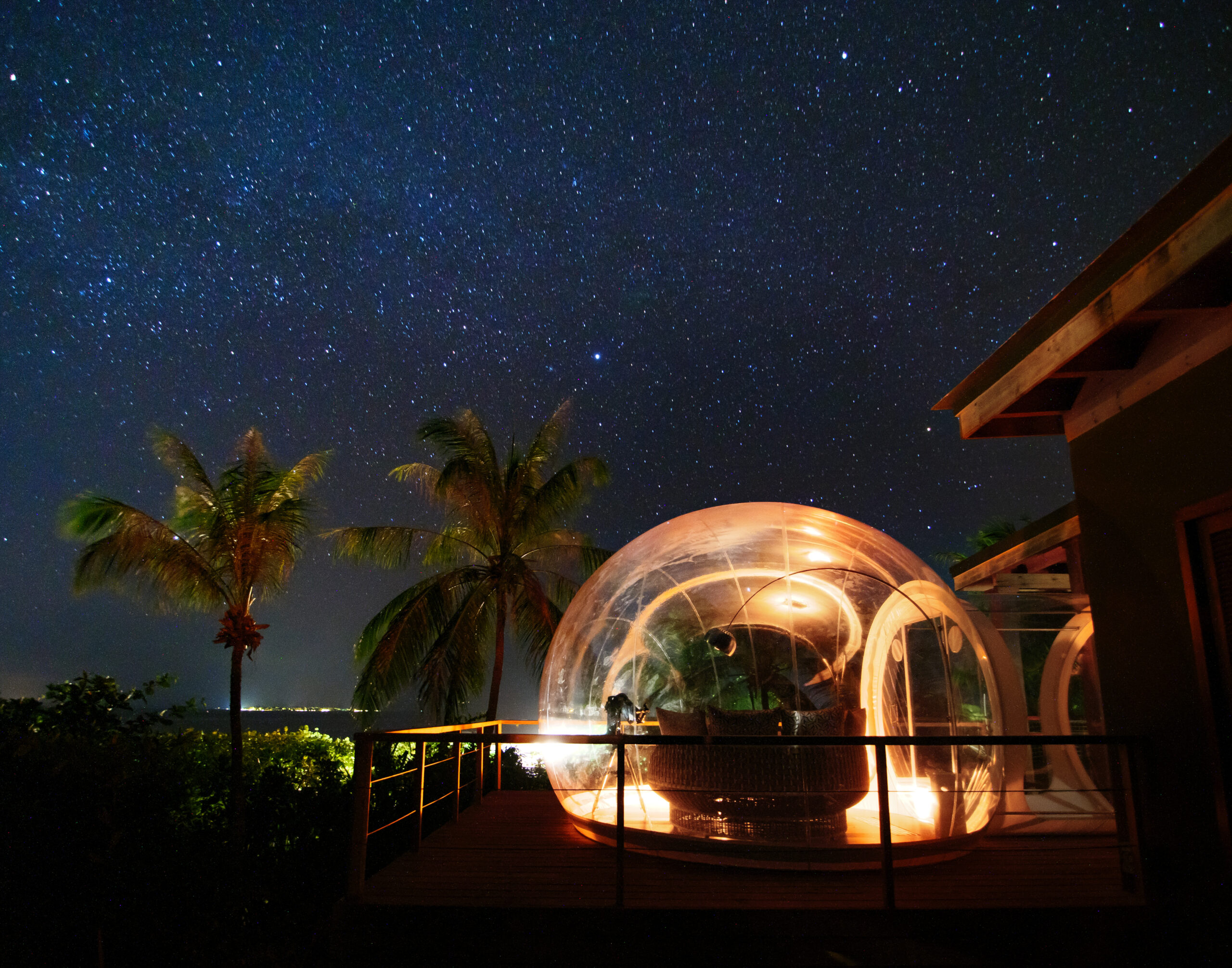
Another key point in the connection between Fuller and Skybubbles is sustainability. While traditional architecture has been marked by excessive resource consumption and waste generation, Fuller envisioned a world where structures were self-sufficient and energy-efficient. Along these lines, Skybubbles not only seeks to minimize its environmental impact, but also relies on recyclable materials and low-consumption technologies, aligning with a more ecosystem-friendly approach to architecture.
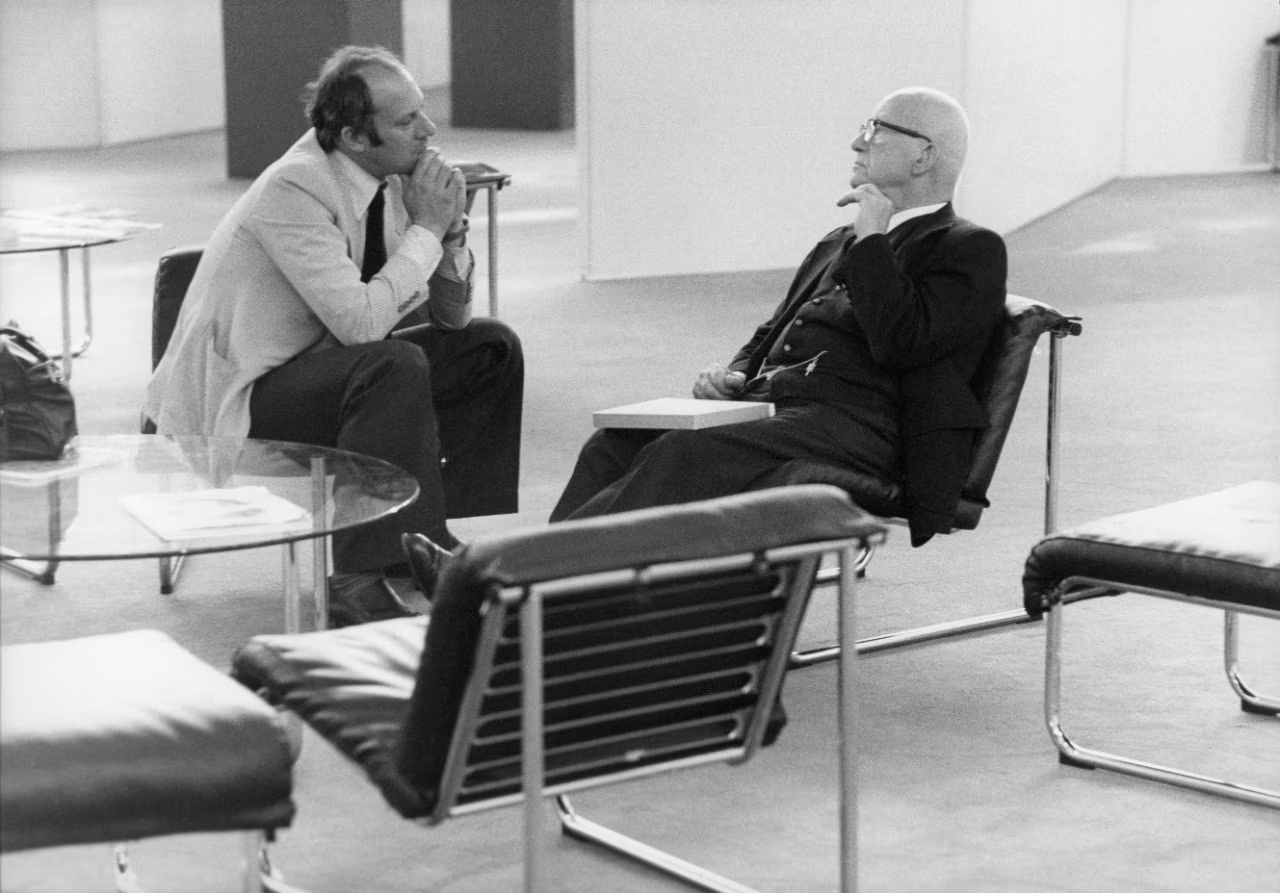
Throughout his life, Fuller argued that the future of architecture did not lie in building more, but in building better: smarter, lighter structures that respect the environment. Skybubbles embodies this philosophy, providing a real alternative to traditional accommodation models and demonstrating that it is possible to inhabit nature without disrupting its balance.
We like to think that if Buckminster Fuller were alive today, he would probably see Skybubbles as a confirmation of his ideas and an example of how his vision remains relevant in the pursuit of a more sustainable world connected to nature.