
Flexibility as a strategy: why modular spaces are gaining ground
Architecture, especially in the hospitality sector, has historically been anchored to the permanent. Brick and concrete constructions have been the pillar upon which most tourism infrastructure has been built. However, over time and with the growing desire of guests to live unique, ephemeral experiences, modular solutions have taken center stage. These spaces not only offer adaptable flexibility, but also present a versatility that allows tourism businesses to evolve and respond quickly to new market demands.

Modularity: architecture that adapts to times of change
In times of economic uncertainty, for instance, the ability to reconfigure and relocate a space without compromising business operations becomes a decisive advantage. It is not merely a matter of costs, but also of adaptability to the environment and to market shifts. And this flexibility extends far beyond functional aspects. Modular spaces are also more sustainable, as they allow for the reuse of structures and materials, minimizing long-term environmental impact.
Portability and the evolution of hospitality
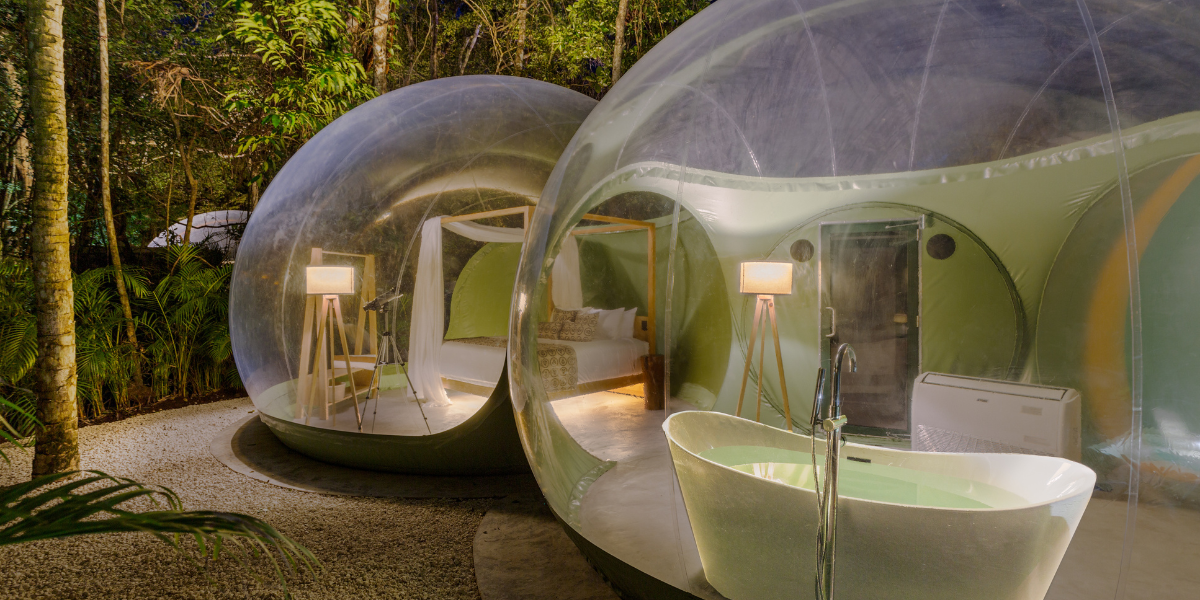
In this sense, Skybubbles present themselves as a perfect solution for establishments looking to stand out in a competitive and constantly changing market. Their ability to be installed anywhere without the need for major construction or permanent impacts makes them an ideal option for those wishing to add value to their offering without compromising the future of the location. Whether in a mountain landscape, on the coast, or in an urban setting, Skybubbles allow hotels and resorts to expand their accommodation capacity or create unique experiences without making investments that tie down the future of their business.
Flexibility and sustainability: the perfect pairing
Through their lightweight design and ability to adapt to any terrain, Skybubbles respond to the demands of modern hospitality: flexibility, sustainability, and profitability. Furthermore, by being easily relocatable and scalable, they represent a future-proof option for hotels and resorts that want to continue innovating and meeting new market expectations.
Adaptability as the key to profitability
It is no longer just about creating static spaces. Establishments that adopt modular solutions like Skybubbles have the opportunity to rapidly transform their offer, optimizing space utilization and enhancing the guest experience. And best of all: with high profitability right from the start.
Flexibility as a strategic advantage
Flexibility is the future. And those who embrace it now will be one step ahead.