
Arquitectura efímera: del siglo XX al turismo experiencial
In that century, the concept took on a new dimension thanks to artistic and cultural movements seeking to break with established frameworks. The Archigram group, for instance, proposed a mobile, modular, and temporary architecture in the 1960s as a critical alternative to rigid, mass-oriented urbanism. In that same decade, figures like Yona Friedman or Cedric Price reflected on the possibility of flexible, adaptable, short-lived structures in response to a changing society that was more dynamic and less dependent on fixed ways of inhabiting.
Yet ephemeral architecture was not merely a conceptual experiment. It also became a fertile ground for technical and material innovation. The temporary pavilions of international exhibitions—such as the German Pavilion by Mies van der Rohe in 1929 or the Philips Pavilion by Le Corbusier and Xenakis in 1958—marked milestones in how space could be conceived without the obligation of permanence, exploring new technologies, structural forms, and lightweight materials with creative freedom.
From exhibition to the natural environment: an evolution toward experience
Festivals like Burning Man in the Nevada desert have taken this idea to the extreme: temporary cities that emerge and disappear without a trace, inhabited for just a few days by thousands of people. In other contexts, such as accommodation, pop-up hotels, seasonal pavilions, or demountable capsules have emerged—all designed to offer a unique, intense experience that is limited in time.
According to a Booking.com report (2023), 73% of global travelers prefer experiences over material goods, and 55% feel more attracted to unconventional accommodations that allow them to “experience something different.” Ephemeral architecture directly addresses this demand. Its adaptable, lightweight, and reversible nature not only allows for a reduced environmental impact, but also enables new ways of inhabiting the environment: more flexible, more emotional, and, in many cases, more memorable.
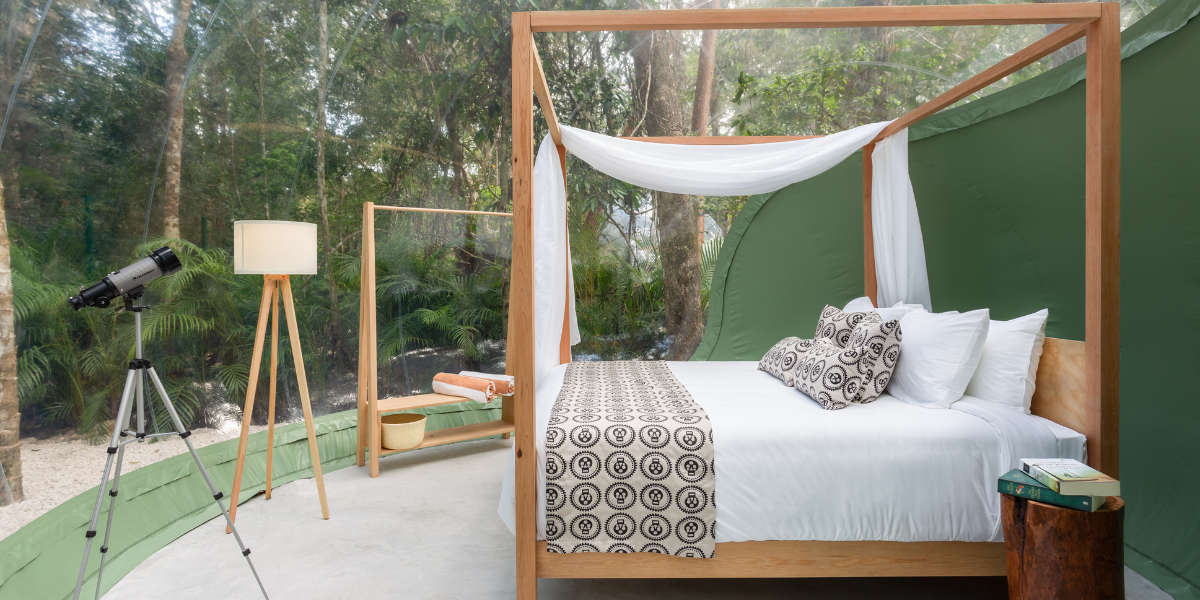
Skybubbles: a contemporary continuity
Unlike the purely artistic or conceptual installations of the 20th century, Skybubbles offer real, scalable solutions for accommodations seeking to stand out. Their assembly requires no foundations, their impact on the land is minimal, and their integration into the landscape is visually respectful. At the same time, they provide guests with a deeply sensory experience: sleeping under the stars, surrounded by nature, without giving up comfort.
Far from being a passing fad, Skybubbles represent a way of rethinking how we inhabit the temporary. From a functional approach, yes; but also from an emotional logic. They are an architecture that does not seek to impose itself on the environment, but rather to disappear within it, accompanying the traveler in an experience that, precisely because it is ephemeral, becomes unforgettable.